
Legal Fellowship Program · 2026
International legal responses to the systematic oppression of Afghan women
A three-part, peer-reviewed series examining the gap between recognition and enforcement—and between symbolic commitments and meaningful accountability.
- 3
- Legal papers
- Peer reviewed
- Publication series
- September
- 2026
AAF Legal Paper Series 01—03
The collection
Three papers. One accountability question.
Each paper tests a different legal pathway against the realities of enforcement, jurisdiction, and political will.
Read the paper ↗
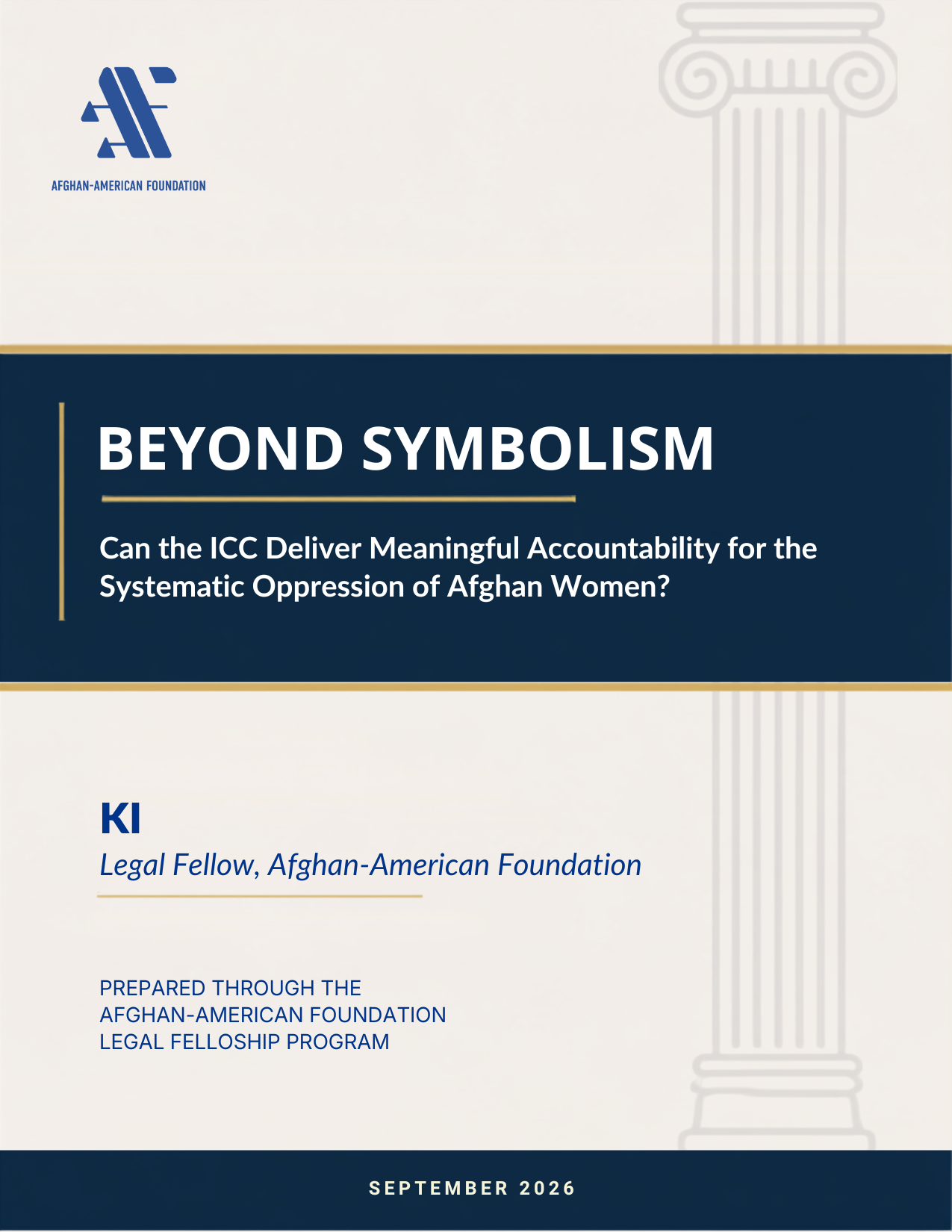
Beyond Symbolism
Can the ICC Deliver Meaningful Accountability for the Systematic Oppression of Afghan Women?
Assesses the capacity and limitations of the International Criminal Court in addressing these harms.
Read the paper ↗
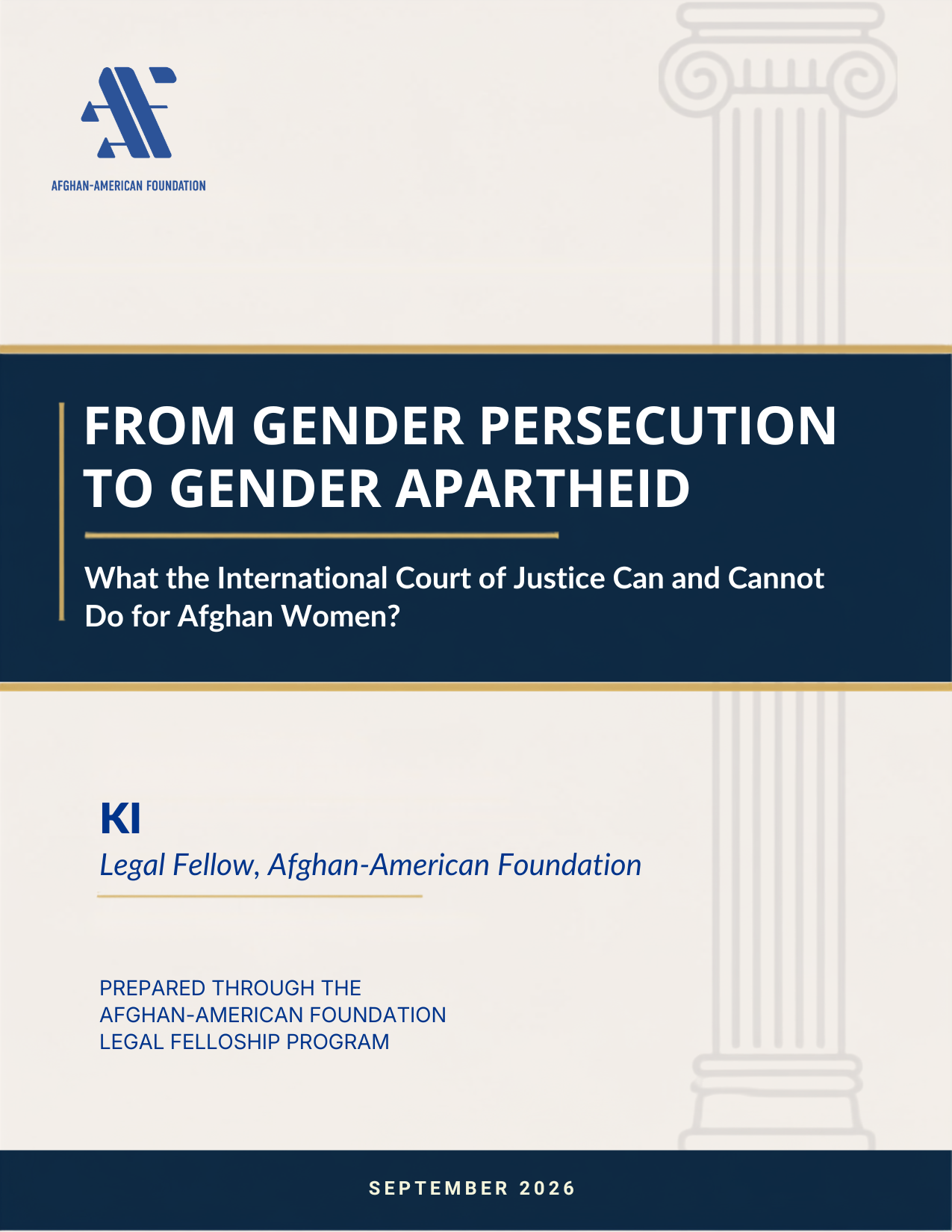
From Gender Persecution to Gender Apartheid
What the International Court of Justice Can and Cannot Do for Afghan Women
Examines gender apartheid as a legal framework and the possibilities and limits of action before the ICJ.
Read the paper ↗
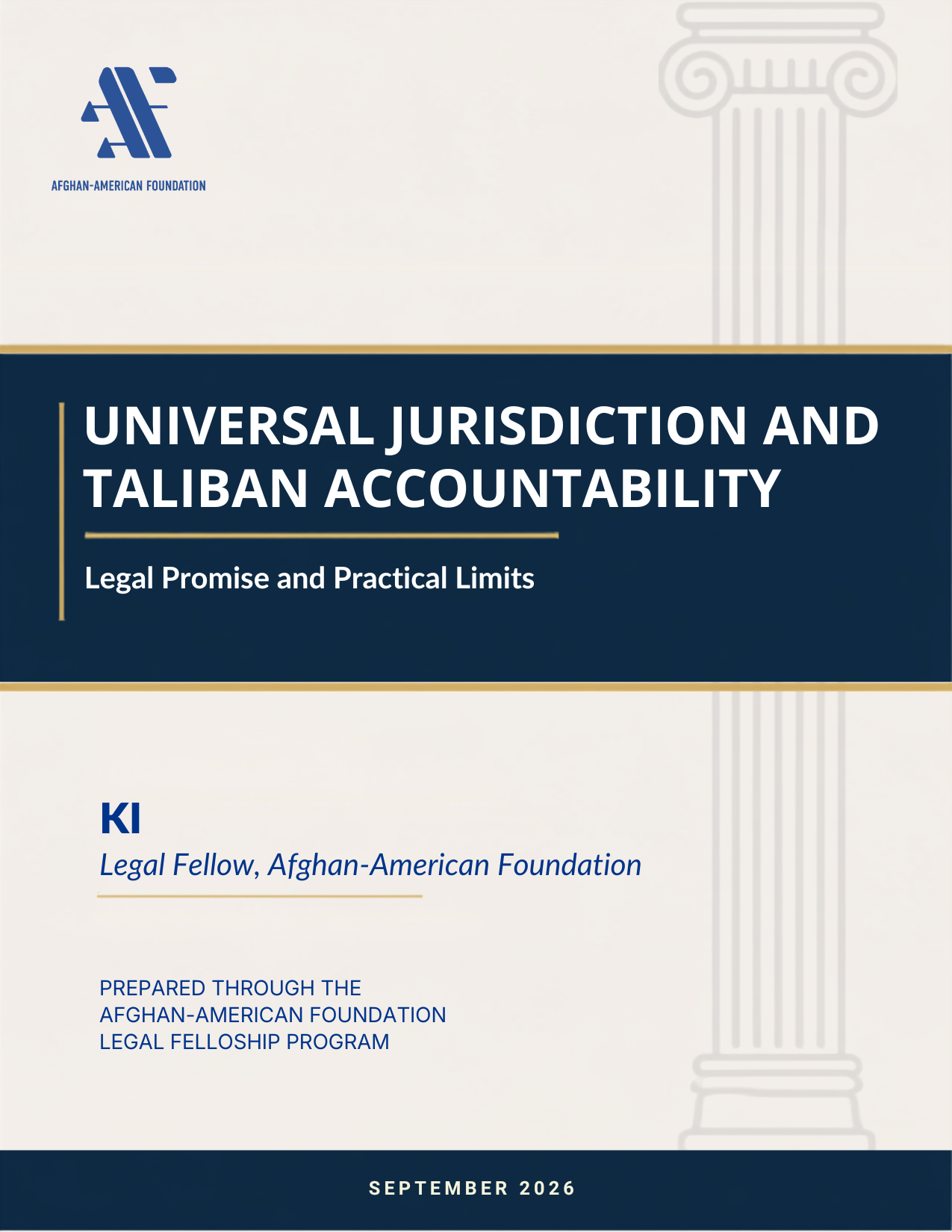
Universal Jurisdiction and Taliban Accountability
Legal Promise and Practical Limits
Examines the legal promise and practical limits of universal jurisdiction as a pathway to Taliban accountability.
Series note
From recognition to enforcement
This paper series examines the evolving international legal and policy responses to the systematic oppression of Afghan women. “From Gender Persecution to Gender Apartheid” explores the legal foundations and arguments for recognizing gender apartheid as a distinct crime under international law. “Beyond Symbolism” assesses the capacity and limitations of existing accountability mechanisms, particularly the International Criminal Court. “Universal Jurisdiction and Taliban Accountability” examines universal jurisdiction as a pathway to accountability.
Together, the papers seek to bridge the gap between recognition and enforcement, and between symbolic commitments and meaningful accountability.
Accountability requires more than recognition. It requires legal pathways capable of moving from principle to practice.
About the work
The AAF Legal Fellowship Program
The series was developed through the Afghan-American Foundation Legal Fellowship Program for legal scholars, policymakers, advocates, donors, and other expert audiences.
Authored by KI, Legal Fellow, Afghan-American Foundation, with guidance and editorial review from Mustafa Babak.
Explore AAF’s workResearch & thought leadership